
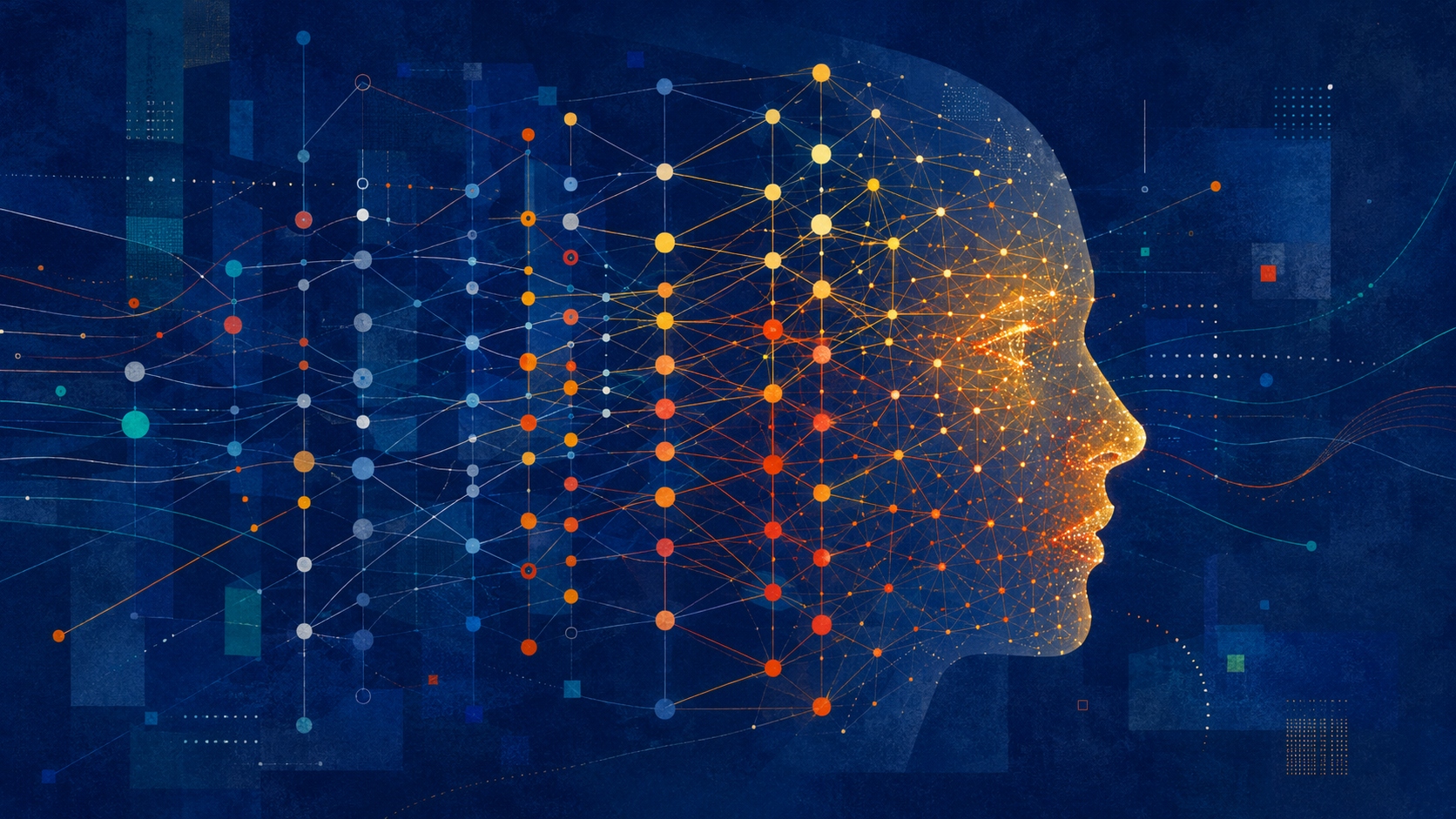
Anthropomorphism is the attribution of human mental characteristics to non-human entities.
What factors make us treat an AI as if it were a human being, and are we making a mistake when we do so?
Key Points:
- Anthropomorphism is the attribution of human mental characteristics to non-human entities. It is distinct from the related notions of agency and animacy, which do not require a target to be perceived as specifically human-like.
- The phenomenon is largely spontaneous, driven by a sub-cortical brain mechanism separate from ordinary person-perception. It is triggered by human-like behavior and expectation violation, and amplified by social isolation.
- Because AI systems are historically expected to function as error-free tools, instances of error or apparent subjectivity powerfully violate expectations, making these the chief dimensions that trigger the perception of AI “humanness.”
- When users report that an AI seems conscious or aware, it is difficult to know whether this reflects something real about the system or is merely the result of anthropomorphism. Understanding what drives the perception is a precondition for assessing what, if anything, it is evidence of.
When a chatbot refuses a request and offers what sounds like a reason, something in us responds as though we are dealing with a mind. This response is not a quirk of the credulous or the technophobic, it is a basic feature of human cognition.
Anthropomorphism is the attribution of human mental characteristics to non-human entities, and understanding it is now practically urgent. AI systems are increasingly designed to behave in human-like ways, which makes it genuinely difficult to know whether perceiving them as minded reflects something real or something about us. The question is not whether people anthropomorphise AI (they do) but what drives that perception, and what we risk when we mistake it for detection.
What Anthropomorphism Is, and Isn’t
Anthropomorphism is often conflated with two related but distinct concepts. Agency is attributed to entities that appear goal-directed and responsible for their own movement – a minimal attribution of mind, but not a human one. Animacy is attributed to entities that appear life-like; again, not necessarily human. Anthropomorphism requires more: the target must be perceived as human-like specifically. It often builds on agency and animacy, but neither is sufficient for it. A robot vacuum can seem animate and even purposeful without triggering the sense that there is a human-like mind behind it.
The Mechanisms of Anthropomorphism
Perceiving a person involves two separable processes: basic sensory perception of their physical form, and mentalising, the inference of the contents of their mind. What makes anthropomorphism especially striking is that these two processes can come apart entirely. We do not need to misperceive a target as human for the mentalising process to engage. A child who scolds a lamp for being in the way, or an adult who apologises to a chair after bumping into it, is not confused about what they are looking at. The sensory perception is accurate. It is the mentalising that has fired independently of it. This dissociation is what makes anthropomorphism possible across such a wide range of targets, from simple moving toys to sophisticated AI systems, and it is also what makes it so difficult to correct by simply paying closer attention.
Anthropomorphism recruits a sub-cortical brain structure called the amygdala, a learning and threat-detection mechanism central to survival. This matters for two reasons. First, anthropomorphism is largely spontaneous, occurring before deliberate reflection kicks in. Second, because the amygdala operates separately from the neo-cortical network that handles ordinary human perception, anthropomorphism is a genuinely distinct cognitive event, not a simple misfiring of normal person-perception.
Two triggers are especially relevant to AI. The first is behaviour: systems that behave in human-like ways reliably elicit anthropomorphism. The second is expectation violation. When a system does something surprising, for example, a chatbot that declines a task and explains itself, or a car that won’t start and seems to be resisting, we reach for a minded explanation. Social isolation amplifies both triggers. Human beings are social creatures who need a sense of connection and control, and mentalising provides both, even when the target is not human.
Epistemic Stakes and Sentience
The epistemic stakes become clearest in debates about AI sentience. When users report that an AI seems conscious or aware, we face a genuine interpretive problem: are they detecting something real, or are they merely anthropomorphising? Human perception does not determine humanness by checking ontology, by asking what something actually is, but by matching against a cognitive schema, a stored representation of what a human being is like.
While ordinary person-perception typically relies on evaluating dimensions like warmth and competence, research indicates the perception of AI humanness relies on different dimensions. This divergence is rooted in the functions for which these systems were created. Historically, computing systems have been designed to operate as flawless, deterministic tools. Because of this baseline assumption, any display of error or apparent subjectivity acts as a profound expectation violation. When an AI produces a hallucination, makes an error, or expresses a simulated opinion, the surprise instantly triggers the sub-cortical mentalising process. Therefore, the appearance of subjectivity and error-proneness in a system expected to have neither becomes the primary engine generating the illusion of an internal mental life.
This does not settle the question of AI sentience, which remains open. But it does mean that the intuitive sense that an AI is conscious carries less evidential weight than it might seem to. The mechanism generating that sense is spontaneous, operates below reflective awareness, and is specifically sensitive to cues that AI systems increasingly produce by design. When the perception of a mind is this easy to trigger, scrutiny cannot be optional.